
Posted inHome

Rodriguez-Trump
Posted inMetro News Politics World News
Venezuelan govt begins release of political prisoners amid US pressure

The Venezuelan government has started freeing detainees identified by human rights groups as political prisoners, saying the action is intended as a goodwill step.
Spain’s foreign ministry said five of its citizens, including one dual national, were among those released.
Rights activist Rocío San Miguel is believed to be included in the group, according to officials.
The releases follow the US operation that seized Venezuela’s President Nicolás Maduro in Caracas on Saturday, after which he was taken to New York to face drug trafficking charges.
Washington has for years pushed for the release of political prisoners in Venezuela, particularly during periods linked to elections or public protests.
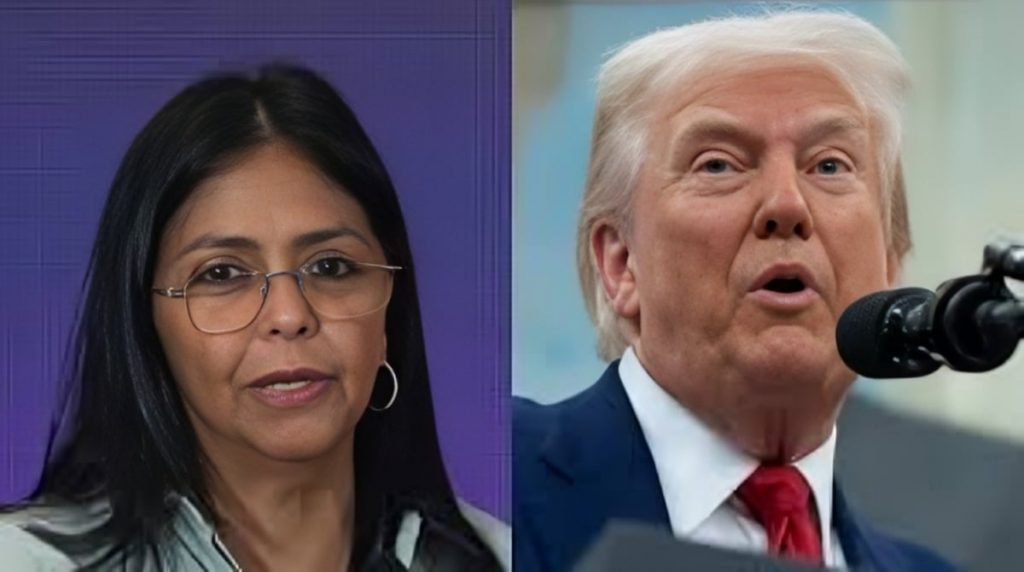
Jorge Rodríguez, head of the National Assembly and brother of interim president Delcy Rodríguez, said on state television that “a significant number” of detainees would be released immediately.
He did not disclose how many people would be freed or provide names.
Hundreds of political prisoners are detained in Venezuelan prisons, with only a handful thought to have been released so far.
Jorge Rodríguez said the interim government was releasing them in the interest of “national unity and peaceful coexistence”.
The release of San Miguel, who is an expert in security, defence and Venezuela’s military was the first freed prisoner to be confirmed.
She had been arrested in 2024 at Maiquetia airport, near Caracas.
It was alleged at the time that San Miguel, a vocal critic of Maduro, was involved in a plot to kill the then-president and faced charges of treason, conspiracy and terrorism.
Venezuelan human rights organisations – some of which have members or their founders in jail – welcomed the news with caution.
Despite being a key lieutenant of Maduro, Delcy Rodríguez’s interim administration has appeared willing to co-operate with the US since it took its leader and made sweeping declarations about the South American nation’s future.
About 50 to 80 prisoners are believed to be held at the notorious El Helicoide prison, which US President Donald Trump announced would be closed following Maduro’s capture.
The prison gained international notoriety for detaining alleged political opponents, with reports by human rights groups of torture including beatings and electrocution.
The announcement also comes shortly after US President Donald Trump stated that he had “given orders to close that prison,” which had become one of the most notorious symbols of political repression in the country.
Venezuelan human rights group Provea warned El Helicoide’s anticipated closure should not deflect attention from the other detention sites still running across the country.
Opposition leader and Nobel Peace Prize winner Maria Corina Machado, who has several close allies in prison, has repeatedly demanded releases.
In an interview with Fox News programme Hannity, Trump said Machado was expected to visit the US “next week sometime”.
Machado told host Sean Hannity she wanted to give Trump her Nobel Peace Prize, and when asked if he would accept it, he replied that “that would be a great honour”.
Venezuela’s opposition and human rights groups have long accused the government of using detentions to silence critics, a claim rejected by Attorney General Tarek Saab and other officials, who say those held were arrested for criminal offences.

Post navigation
Previous Post
 Chimamanda Adichie loses son



Fortunesnakebr, alright, let’s see what you got! Heard they got some cool slots. Trying my hand at a few. Fingers crossed! Good vibes so far!. fortunesnakebr
Great awesome issues here. I?¦m very glad to look your article. Thanks so much and i am looking ahead to contact you. Will you kindly drop me a e-mail?
I’d have to test with you here. Which isn’t something I usually do! I enjoy reading a submit that can make people think. Additionally, thanks for allowing me to remark!